The following video does an excellent job in succinctly explaining why our United States is currently where it is.
Mirlisa
When he tells you who he is…believe him
I listened to a Trump speech this morning. And I QUOTE:
“Christians, get out and vote! Just this time. You won’t have to do it anymore. Four more years. You know what? It’ll be fixed! It’ll be fine! You won’t have to vote anymore, my beautiful Christians. I love you, Christians! You gotta get out and vote. In four years, you don’t have to vote again. We’ll have it fixed so good, you’re not gonna have to vote.”
They’re saying the quiet parts out loud. Believe them.
VOTE for Kamala so you can vote again in four years.
Freedom!
Project 2025 – Social Security
We’re hearing candidates talk a lot about Project 2025. So, what is it?
Project 2025 is an initiative by conservative groups in the United States aimed at preparing policies and personnel for a potential future Republican administration. It does seem to assume that the convicted felon Donald Trump will be the next President. It seeks to outline a comprehensive policy agenda and identify individuals to fill key government positions, ensuring a ready-to-implement plan to advance conservative priorities and governance strategies.
What about Social Security? Well, Project 2025 wants to privatize Social Security. The following illustrates some of the arguments for and against.
Arguments for: [My comments are in brackets]
The main arguments for this move are:
- Higher Returns on Investment: Proponents argue that private accounts could potentially yield higher returns than the current Social Security system. By investing in the stock market and other private assets, individuals could accumulate more wealth over time compared to the fixed returns provided by Social Security. [Potentially lower returns, as well]
- Increased Personal Control: Privatization would give individuals more control over their retirement savings, allowing them to manage their own investment strategies and tailor their portfolios to their personal risk tolerance and financial goals. [Investment strategies for people with no expertise in this area – what could possibly go wrong?]
- Reduced Government Liability: By shifting the responsibility of retirement savings to individuals, the government could reduce its long-term financial obligations. This is seen as a way to address the projected shortfalls in the Social Security trust fund without increasing taxes or cutting benefits directly. [The maximum taxable earnings are way lower than they should be. Raising these will go a long way to shoring up SS.]
- Encouraging Longer Workforce Participation: Raising the retirement age and encouraging private retirement savings is believed to keep older workers in the workforce longer, which could contribute to economic productivity and reduce the strain on Social Security funds. [Pardon me, but I don’t want to FUCKING REMAIN IN THE WORK FORCE during my golden years!]
Arguments against:
Privatizing Social Security is considered perilous for several reasons:
- Market Risk: Privatization typically involves investing Social Security funds in the stock market. While the market can offer higher returns, it also comes with significant risk. Market downturns or crashes could drastically reduce the value of retirement savings, leaving retirees without sufficient funds.
- Inequity: The stock market favors those with more knowledge and resources. Privatization could exacerbate inequality, as wealthier and more financially literate individuals are better positioned to take advantage of investment opportunities. This would widen the gap between the rich and the poor.
- Management Fees: Private investment accounts often come with management fees, which can erode returns over time. These fees could significantly reduce the amount of money available for retirees compared to the more modest administrative costs associated with the current Social Security system.
- Transition Costs: Moving from a public to a private system would incur significant transition costs. Current contributions are used to pay current retirees, so diverting these funds to private accounts would require finding alternative funding sources to cover existing obligations, potentially increasing national debt.
- Volatility and Uncertainty: Unlike the guaranteed benefits provided by the current Social Security system, private accounts are subject to market fluctuations. This uncertainty can make financial planning more challenging for individuals who rely on a predictable income in retirement.
- Reduced Benefits for Low-Income Workers: Social Security is designed to provide a safety net, particularly for low-income workers. Privatization could undermine this aspect, as low-wage earners might not be able to save enough to secure a decent retirement income, exacerbating poverty among the elderly.
- Administrative Complexity: Managing millions of individual investment accounts is far more complex and costly than managing a single, centralized system. This complexity could lead to inefficiencies and increased administrative costs.
- Potential for Fraud and Mismanagement: Privatized systems could be more vulnerable to fraud and mismanagement. Ensuring the integrity of the system would require robust regulatory oversight, which could be difficult to implement and enforce effectively.
Overall, the risks associated with privatizing Social Security stem from the inherent uncertainties of the financial markets, the potential for increased inequality, and the administrative and transition challenges involved.
Think about it – your retirement income based on the whims of the stock market. No thank you.
In my view, Social Security is incredibly important in its present form. In order to shore it up I propose increasing the maximum taxable earnings. In my view, they should be at least THRICE what they are.
DEI Candidate?
Why yes! Kamala Harris is a DEI candidate. She’s Diverse, Educated and Intelligent.
Thank you for asking!
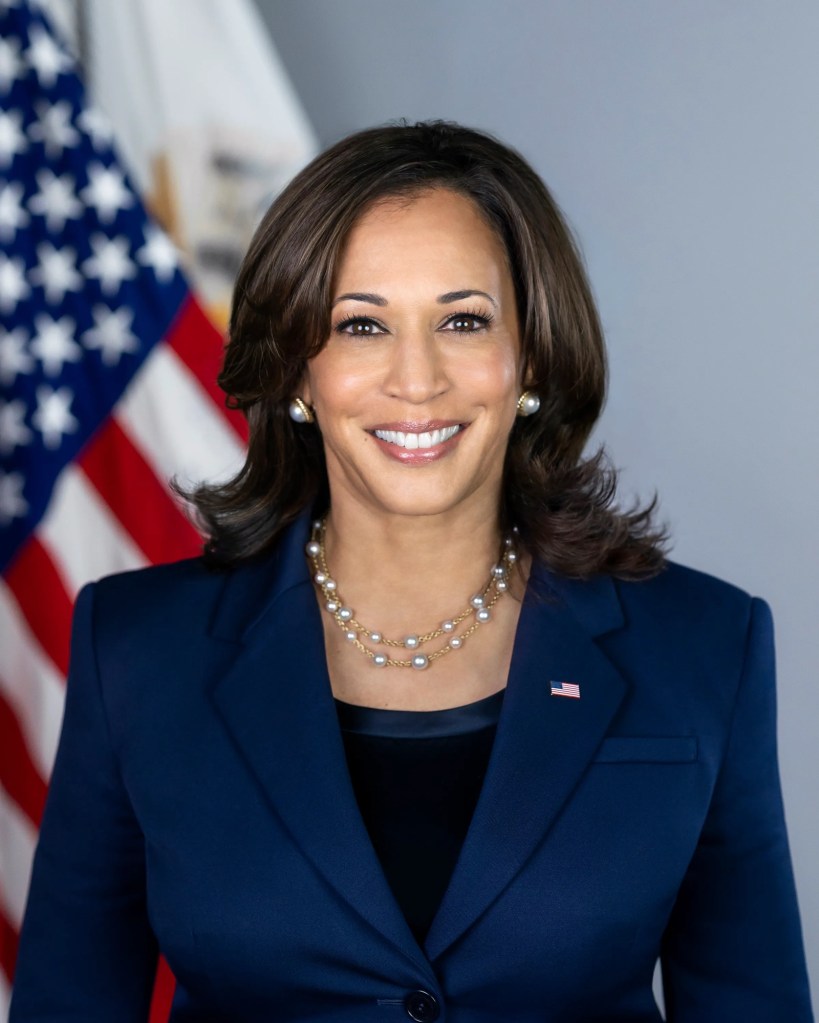
Kamala Harris…for the People
Kamala Harris should be the next President of the United States because she brings a unique combination of experience, leadership, and vision that aligns with the needs of a diverse and evolving nation. Her career demonstrates a commitment to justice, equality, and effective governance, which are crucial qualities for leading the country.
First, Harris has a strong record of public service at multiple levels of government. As a former Attorney General of California, she implemented significant reforms in criminal justice, including initiatives to reduce recidivism and address systemic inequalities. Her experience as a U.S. Senator further showcases her ability to navigate complex legislative environments, advocate for progressive policies, and build bipartisan coalitions.
Second, Harris’s background and personal story resonate with many Americans. As the daughter of immigrants, she embodies the American dream and understands the challenges faced by diverse communities. Her historic role as the first female, first Black, and first South Asian Vice President has already broken significant barriers, inspiring millions and proving her capability to handle the highest levels of leadership.
Moreover, Harris has shown a deep commitment to addressing key issues such as healthcare, climate change, and economic inequality. Her advocacy for affordable healthcare aims to ensure that all Americans have access to necessary medical services. Her stance on climate change emphasizes the urgent need for sustainable policies and investments in green technology, which are essential for the future of the planet. Additionally, her focus on economic justice seeks to create a fairer economy that works for everyone, not just the wealthy.
In international relations, Harris has demonstrated a nuanced understanding of global affairs, promoting diplomacy and cooperation while standing firm on human rights and democratic values. Her ability to represent the U.S. on the world stage is critical in maintaining and strengthening alliances, addressing global challenges, and ensuring national security.
Lastly, Kamala Harris embodies the spirit of resilience and determination. Her ability to overcome obstacles and her unwavering dedication to public service make her a compelling candidate for the presidency. She has proven that she can lead with empathy, intelligence, and strength—qualities essential for guiding the nation through its current challenges and toward a brighter future.
Uh-oh
In the dim and dreary midnight, where shadows coil and creep,
In a house of ancient timber, lies a secret dark and deep.
The silence there is shattered by a ceaseless, whispered gnaw,
As termites, vile and cunning, spread their hunger like a flaw.
Oh, the gnawing, gnawing, gnawing, of their mandibles at work,
In the rafters and the floorboards, where unseen, they twist and lurk.
These minions of decay, in their legions stark and fell,
Transform the sturdy beams to dust—a slow, insidious spell.
Once a home of mirth and laughter, now a hollow, haunted space,
With the echo of the past, now replaced by Time’s grim trace.
For the termites’ ceaseless hunger knows no mercy, shows no end,
And the wood they feast upon is the wood that will not mend.
Beneath the moon’s pale glow, in this cavern of despair,
Where the walls seem but a whisper of the life that once was there,
I ponder on the silent dread, the ruin at my door,
As the termites gnaw forevermore, till the house shall be no more.
Oh, the gnawing, gnawing, gnawing, through the night and through the day,
In the heart of every timber, in the wood that’s turned to gray.
They are death’s own quiet harbingers, the shadows in the grain,
And the tale they tell is sorrow’s song, an unrelenting bane.
In this chamber void of solace, where the night does not retreat,
Where the termites’ dark dominion makes the stillness more complete,
I feel the creeping terror, as they whisper to my soul,
That the house and all within it are now under their control.
Thus I sit in silent torment, in a tomb of my own fears,
As the termites’ gnawing chorus drowns the memories and tears.
And I know that in this darkness, where their hunger finds its path,
There’s no respite, no salvation, from the termites’ silent wrath.
~ChatGPT in the style of Edgar Allen Poe
Lady Whistledown on Trump
June 9, 2024
Dearest Readers,
It has come to this writer’s attention that the upcoming elections have set our society abuzz with a fervor and intensity unseen since the days of great social reformations. The cause of such a stir? None other than Mr. Donald J. Trump, a figure whose presence upon the political stage elicits admiration in some and apprehension in many.
Permit me to lay bare the reasons why it is my humble yet firm conviction that Mr. Trump must be defeated in his quest to reclaim the highest office in the land.
- A Tempest of Division
Mr. Trump’s tenure, while undeniably eventful, was marked by a polarizing fervor that left the nation more divided than ever before. His rhetoric, often inflammatory, fostered an environment where civil discourse was the first casualty. From stirring distrust in the press to emboldening the most extreme elements within our society, Mr. Trump’s return could only promise further division and discord. A leader ought to unite, not fracture the delicate fabric of our social order.
- A Contempt for Democratic Norms
There is a chilling familiarity with Mr. Trump’s disdain for the very norms that sustain our democracy. His baseless claims of a stolen election in 2020, despite all evidence to the contrary, sowed seeds of doubt in the hearts of many about the integrity of our electoral process. The relentless assault on democratic institutions and the judiciary must be viewed with the gravest concern, for a democracy weakened from within is a democracy imperiled.
- A Climate of Corruption
One need not look far to find tales of nepotism, cronyism, and ethical lapses that have marred Mr. Trump’s administration. His refusal to disentangle personal business interests from the affairs of state raised significant questions about corruption and conflict of interest. The halls of power must be corridors of service and integrity, not avenues for personal gain and influence.
- A War on Truth
Mr. Trump’s relationship with truth and facts has often been tenuous at best. The era of “alternative facts” heralded a disturbing trend where misinformation and outright falsehoods became commonplace. An informed citizenry is the bedrock of a functioning democracy; when the truth is besieged, the foundation upon which we stand is gravely shaken.
- An Isolationist Stance
In the realm of foreign affairs, Mr. Trump’s approach often veered towards isolationism, withdrawing from critical international agreements and alliances. His “America First” doctrine, while appealing to some, neglected the intricate web of global interdependence that ensures peace and stability. A return to such policies could estrange our nation from vital partnerships and diminish our influence on the world stage.
- A Legacy of Inequality
Under Mr. Trump’s administration, policies that disproportionately favored the wealthy and neglected the vulnerable exacerbated the chasms of inequality. The tax cuts, primarily benefiting the affluent, and the rollback of regulations protecting the environment and worker rights, are but a few examples of a legacy that served the few at the expense of the many.
In conclusion, dear readers, the path forward for our beloved nation requires a leader who can heal, who can uphold the sanctity of our democratic institutions, who can govern with integrity, who can champion the truth, and who can engage with the world in a spirit of cooperation and respect. Mr. Trump’s record, replete with division, contempt, corruption, misinformation, isolationism, and inequality, stands in stark opposition to these noble goals.
Let it be known that while the pages of history are yet unwritten, the ink with which they are penned must reflect the values we hold dear. It is imperative, for the sake of our present and the promise of our future, that Mr. Trump be defeated.
Yours faithfully,
Lady Whistledown
GOP Dangerous to Democracy?
The Republican Party (GOP) poses dangers to democracy based on several key actions and tendencies that they believe undermine democratic principles and institutions. Here are the main points of concern:
1. Erosion of Voting Rights:
• Voter Suppression: Critics assert that the GOP has engaged in practices aimed at suppressing voter turnout among demographics that typically lean Democratic, such as minority communities, young people, and urban dwellers. These practices include stringent voter ID laws, purging voter rolls, reducing polling places, and limiting early voting and mail-in voting options.
• Gerrymandering: The GOP has been accused of aggressively redrawing electoral districts to entrench their political power. This process, known as gerrymandering, can distort representation and undermine the principle of fair and equal elections.
2. Undermining Electoral Integrity:
• Baseless Claims of Voter Fraud: Following the 2020 presidential election, many GOP leaders, including former President Donald Trump, propagated unfounded claims of widespread voter fraud. Critics argue that these claims have eroded public trust in the electoral process and democracy itself.
• Interference in Election Administration: Efforts by GOP officials to influence or overturn legitimate election results, such as pressuring election officials and promoting partisan audits, are seen as direct threats to the integrity of elections.
3. Support for Authoritarian Tendencies:
• Anti-Democratic Leaders: The GOP’s support for leaders who exhibit authoritarian tendencies, such as Donald Trump, raises concerns about the party’s commitment to democratic norms. Critics point to Trump’s actions, such as challenging election results, undermining the judiciary, and attacking the free press, as evidence of authoritarianism.
• Erosion of Checks and Balances: The GOP’s alignment with executive overreach, particularly during Trump’s presidency, is seen as a weakening of the checks and balances essential to a functioning democracy.
4. Polarization and Divisive Rhetoric:
• Culture Wars: The GOP’s engagement in culture wars, often centered on divisive social issues, is viewed as exacerbating political polarization. This division undermines the ability to reach consensus and govern effectively.
• Demonizing Opponents: The use of inflammatory and sometimes violent rhetoric against political opponents can incite division and hostility, further destabilizing democratic discourse.
5. Disregard for Rule of Law:
• Contempt for Judicial Independence: The GOP’s criticism and attempts to influence the judiciary are seen as undermining the independence of the judicial branch, a cornerstone of democratic governance.
• Selective Law Enforcement: Instances where GOP leaders have selectively enforced laws or granted leniency to allies while harshly prosecuting opponents are viewed as threats to the principle of equal justice under the law.
6. Undermining Media and Free Speech:
• Attacks on the Press: The GOP, particularly under Trump’s leadership, has frequently attacked the media, labeling it as “fake news” and the “enemy of the people.” Critics argue that such rhetoric undermines the free press, which is essential for holding power to account and informing the public.
• Misinformation and Conspiracy Theories: The GOP’s promotion of misinformation and conspiracy theories, particularly about elections and public health (e.g., COVID-19), is seen as damaging to informed public discourse and democratic decision-making.
7. Ignoring or Undermining Ethical Standards:
• Corruption and Nepotism: Critics argue that the GOP has tolerated or even embraced corrupt practices and nepotism, particularly during the Trump administration. This behavior is seen as eroding public trust in government and the ethical standards necessary for democratic governance.
• Conflicts of Interest: Instances of GOP leaders prioritizing personal or party interests over public good are viewed as damaging to the integrity of public office.
In conclusion, the party’s practices and tendencies—such as voter suppression, undermining electoral integrity, support for authoritarian figures, polarizing rhetoric, disregard for the rule of law, attacks on the press, and ethical lapses—pose significant threats to democratic principles and institutions. These concerns highlight the importance of vigilance and active engagement in safeguarding democracy.
In other words, don’t vote Republican.
Convicted Felon Donald Trump
Ladies and Gentlemen,
Today, I stand before you to discuss an important and controversial topic: the authoritarian tendencies exhibited by former President Donald Trump. In the history of American democracy, few leaders have sparked such intense debate and division. It is crucial that we analyze and understand the actions and rhetoric that suggest an inclination toward authoritarianism, so we may safeguard the democratic principles upon which our nation was built.
Firstly, let us consider Trump’s relationship with the media. A hallmark of authoritarian leaders is their attempt to control and delegitimize the press. Throughout his presidency, Trump consistently labeled reputable news outlets as “fake news” and referred to journalists as “the enemy of the people.” This rhetoric undermines the role of a free press, which is essential for holding power to account and informing the public. By attacking the media, Trump sought to discredit any criticism and manipulate public perception to his advantage.
Secondly, Trump exhibited a disregard for the rule of law, another key characteristic of authoritarianism. He frequently challenged the independence of the judiciary, attacking judges who ruled against him and suggesting that their decisions were politically motivated. Additionally, his efforts to obstruct investigations into his administration, including the firing of FBI Director James Comey, raised serious concerns about his commitment to legal norms and accountability.
Another troubling aspect of Trump’s presidency was his use of divisive and inflammatory rhetoric to galvanize his base. Authoritarian leaders often exploit societal divisions to consolidate power, and Trump repeatedly used race, immigration, and national identity as wedge issues. His refusal to unequivocally denounce white supremacist groups and his policies that targeted immigrants and minorities exemplify this strategy. Such actions not only erode social cohesion but also empower extremist elements within society.
Trump’s handling of the 2020 presidential election further highlighted his authoritarian tendencies. Even before the election took place, he cast doubt on the legitimacy of the electoral process, suggesting that any outcome other than his victory would be fraudulent. After losing the election, he refused to concede and promoted baseless claims of widespread voter fraud. His attempts to overturn the election results, including pressuring state officials and inciting the January 6th Capitol insurrection, represented a direct threat to the peaceful transfer of power—a cornerstone of democratic governance.
Moreover, Trump’s admiration for and relationships with authoritarian leaders around the world raised alarms. He consistently praised and sought to emulate figures like Vladimir Putin, Kim Jong-un, and Rodrigo Duterte, who are known for their oppressive regimes. By aligning himself with such leaders, Trump signaled a troubling affinity for autocratic rule and a rejection of the democratic values that the United States has long championed.
Finally, Trump’s efforts to centralize power and undermine democratic institutions were evident in his approach to governance. He often bypassed traditional checks and balances, issuing executive orders to achieve his objectives when legislative processes proved challenging. His appointments of loyalists to key positions, including those who lacked qualifications, were aimed at consolidating control and ensuring compliance with his agenda.
In conclusion, Donald Trump’s presidency exhibited several authoritarian traits, from his attacks on the media and judiciary to his divisive rhetoric and attempts to undermine democratic processes. While opinions on his leadership may vary, it is essential for us as a nation to remain vigilant and committed to protecting our democratic institutions. By recognizing and addressing these authoritarian tendencies, we can ensure that our democracy remains resilient and that the principles of freedom, equality, and justice continue to guide our path forward.
A vote for DT is a vote for authoritarianism.
 Mirlisa's Bits and Pieces